Tampilkan postingan dengan label Player Of The Week. Tampilkan semua postingan

Senin, 31 Desember 2012

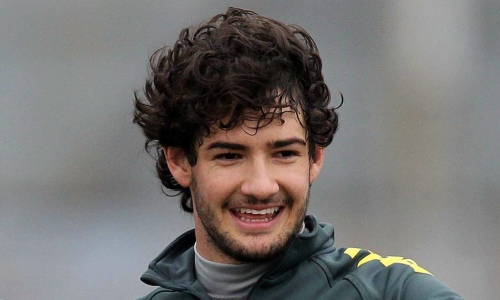
Football Genius: Alexandre Pato

The Biography and career of Alexandre Pato
Alexandre Rodrigues da Silva was born 2 September 1989, commonly known as Alexandre Pato, is a Brazilian professional footballer who plays as a striker for AC Milan and the Brazilian national team. His nickname, Pato, refers to his place of birth, Pato Branco. The literal translation of «pato» from Portuguese to English is «duck,» which has evolved into a common nickname for him. In 2007, Pato was engaged to Brazilian actress Sthefany Brito. They mutually split up in January 2009 due to their inability to keep a long-distance relationship. However, they got back together, and on 7 July 2009, they married in a ceremony at the Copacabana Palace in Rio de Janeiro. However, the marriage lasted less than ten months, and the couple divorced on 21 April 2010, with Brito citing Pato's constant partying as the reason for their split. In 2010, he had a brief romance with Miss Brazil 2010, Débora Lyra. Incumbent European champions Milan of the Italian Serie A officially confirmed the signing of Pato on 2 August 2007.
Alexandre Pato in Brazil National Team
In June 2006, at only 16 years of age, Pato was signed by Sport Club Internacional to compete in the Campeonato Brasileiro Sub-20. Despite the fact that he was competing against players up to four years older than he was, Pato became top scorer of the competition as Internacional Sub-20 defeated Grêmio 4:0 in the championship's final match. Pato was included in the Internacional squad that won the 2006 FIFA Club World Cup. During this event, Pato broke Pelé's long standing record as he became the youngest ever player to score in a FIFA-organised competition at the age of 17 years and 102 days old against African club champions Al-Ahly. Pelé was 17 years and 239 days old when he scored against Wales during the 1958 FIFA World Cup. Ready to join the Inter 13th team in November that same year, his debut finally happened at the Estádio Palestra Itália against São Paulo team Palmeiras for the Campeonato Brasileiro. Alexandre Pato met and surpassed any and all expectations of what was expected of him as he scored his first professional goal within the first minute of the game. The rest of his participation was spent dribbling and confusing defenders as he made two assists to help Internacional rout Palmeiras 4:1. He was substituted off in the 77th minute.
Pato said in an interview with the Brazilian television program Esporte Espetacular that at age 11, he broke his arm and while examining the injuries, doctors found a tumour in the arm and feared the arm needed to be amputated. A successful operation removed the tumour. Due to FIFA football regulations regarding non-EU minors, Pato was unable to play official matches for Milan until 3 January 2008, when the Italian transfer window and registration reopened. Milan, however, were allowed to include the player in friendlies and training beginning 3 September 2007, one day after his 18th birthday. Pato made his non-competitive debut in a 2–2 draw against Dynamo Kyiv on 7 September 2007 and scored a header. On 4 January 2008, Pato's transfer to Milan became official.
Alexandre Pato in AC Milan
Pato scored his first Milan goal on his Serie A debut against Napoli in a 5:2 home victory on 13 January 2008. He scored his first brace for Milan, in a 2:0 victory over Genoa at the San Siro on 27 January. He finished the 2007–08 season with nine goals in 20 appearances. Keeping up with his promising figure, Pato debuted at the Campeonato Gaúcho on 24 February against Veranópolis and scored a goal in the 2:1 victory. He also debuted in Copa Libertadores on 28 February against Emelec of Ecuador and scored once during the 3:0 thumping. But the biggest highlight of Pato's time with Internacional was during the Recopa Sudamericana, as he helped Internacional win their first ever title of that competition. Against Pachuca of Mexico, he scored one goal in the 2:1 defeat in Mexico. But on the return game on 7 June and with more than 51,000 Colorados present, Pato had a great performance as he scored once and led the 4:0 thrashing to win Internacional's third international title. On 13 September, in a Champions League group-stage match against FC Barcelona, Pato scored the fifth-fastest goal in the competition's history, 24 seconds after kick-off. Later that month, he suffered a thigh injury during a 1:1 draw with Udinese. Pato made his return as a sub against Fiorentina and hit the post in the 79th minute in a 0:0 draw. He then scored and won a penalty in a 4:0 win against Chievo and in midweek, scored against Viktoria Plzeň and setup Robinho in a 2:2 draw. He started against Bologna the next week in a 2:2 draw. In January 2012, Pato was on the brink of moving to French Ligue 1 side Paris Saint-Germain. This move would have given Milan the opportunity to make a bid for Manchester City's Carlos Tévez. On 12 January, however, Pato refused the transfer, citing his commitment for the Rossoneri. During the Coppa Italia round of 16 victory over Novara, Pato picked up a muscle strain in his thigh, which tests revealed an injury of his biceps femoris of his left thigh, resulting in him missing the remainder of the season.
All about Alexandre Pato
On 21 October 2012, Pato made his return to Milan, in which he assisted El Shaarawy for the second goal in a 3:2 away defeat to Lazio. On 6 November 2012, in a Champions League group stage match, Pato scored his first goal of the season with a header in a 1:1 draw against Malaga. He scored again in the Champions League against Anderlecht on 21 November 2012. Before the start of the new season, Pato switched to the squad number number 9, as Filippo Inzaghi had retired at the end of the 2011–2012 season. In the third training session of the season he injured his thigh and was kept out for the first six weeks of the new season.

Jumat, 07 Desember 2012

Football Genius: Karim Benzema

The Personal Life of Karim Benzema
Karim Mostafa Benzema was born 19 December 1987. He is a French international footballer who plays for Spanish club Real Madrid in La Liga. He primarily plays as a striker whose influence can extend out to the wings and is known for his technical ability, powerful style of play, and vast goal-scoring ability.
He is described as an «immensely-talented striker» who is «strong and powerful" and "a potent finisher from inside the box». Benzema was born in the city of Lyon, France to French nationals of Algerian descent. His grandfather, Da Lakehal Benzema, lived in the village of Tighzert, located in the northern town of Beni Djellil in Algeria before migrating to Lyon, where he eventually settled in the 1950s. Benzema's father, Hafid, was born in Tighzert, in Kabylie, while his mother, Wahida Djebbara, was born and raised in Lyon; her family originated from Oran. Benzema is the third youngest in the family and grew up with eight other siblings in Bron, an eastern suburb of Lyon. His younger brothers Gressy and Sabri are also footballers. The former currently plies his trade at the amateur level with Vaulx-le-Velin in the Division d'Honneur, the sixth division of French football, while the latter plays in the youth academy of a club in the family's hometown of Bron. Since establishing himself as an international footballer, Benzema has been involved in numerous promotional campaigns. Since 2008, he has regularly appeared on the cover of the French version of the annual FIFA video game. Benzema is sponsored by German sportswear company Adidas and has, subsequently, appeared in several television advertisements for the brand.
Karim Benzema in Real Madrid
Benzema is a former French youth international and has represented his nation from under-17 level onwards. Prior to playing for the senior team, he played on the under-17 team that won the 2004 UEFA European Under-17 Football Championship. Benzema made his senior international debut in March 2007 in a friendly match against Austria. On his debut, he scored his first international goal in a 1:0 win. Benzema has represented France at two major international tournaments; the 2008 and 2012 editions of the UEFA European Football Championship. He made two appearances in the former competition against Romania and Italy in the group stage.
He made his Champions League debut for the club on 30 September in a group stage tie against French club Marseille. In the match, Benzema assisted on a Cristiano Ronaldo goal. After failing to score a goal in the month of October, in the team's first match in November against Italian club Milan in the Champions League, Benzema scored the opener to give Madrid a 1:f0 lead. His goal was later cancelled out by a Ronaldinho penalty. On 7 November, in the El Derbi madrileño, Benzema assisted on Madrid's second goal, scored by Marcelo. Madrid won the match 3:2.
On 18 April 2010, it was first reported by French television service M6 that four members of the French national team were being investigated for their roles as clients in a prostitute ring operated inside of a Paris nightclub, with some of the women possibly being underage. The players were eventually revealed to be Franck Ribery, Sidney Govou, Hatem Ben Arfa, and Benzema. Benzema was alleged to have had a sexual rendezvous with a prostitute when she was 16 years of age, an act Benzema denied through his lawyer. On 20 July, Benzema was questioned by Paris police and indicted on the charge of "solicitation of a minor prostitute." In November 2011, prosecutors asked for the cases against Ribéry and Benzema be dropped, saying that the players were not aware that the escort was 16 years old.
The Bio and Carrer of Karim Benzema
Benzema began his football career at his hometown club Bron Terraillon SC at the age of eight. While at the club, he was nicknamed Coco by friends and, after scoring two goals in an under-10 match against the Lyon youth academy, began attracting attention from the biggest club in the city. According to Serge Santa Cruz, who was president of Bron Terraillon in the 1990s, Lyon officials had visited him directly in an attempt to sign the youngster; however, Santa Cruz refused. After talking with Benzema's father, the club allowed the player to undergo a trial with Lyon. Following the trial, Benzema officially joined Lyon and was inserted into the club's academy at the age of nine.
Benzema quickly ascended up the youth categories in the academy. He served as a ballboy during Lyon senior team matches and performed well in school being described as a student who was «discreet and respectful». Benzema was born in the city of Lyon and began his football career with local club Bron Terraillon. In 1996, he joined the biggest club in the city Olympique Lyonnais and, subsequently, came through the club's youth academy. Benzema made his professional debut in the 2004–05 season and appeared sporadically in his first three seasons as Lyon won three titles in that span. In the 2007–08 season, Benzema became a starter and had a breakthrough year scoring over 30 goals as Lyon won its seventh straight league title. For his performances, he was named the National Union of Professional Footballers (UNFP) Ligue 1 Player of the Year and named to the organization's Team of the Year. Benzema was also the league's top scorer and given the Bravo Award by Italian magazine Guerin Sportivo. After another season at Lyon, in July 2009, Benzema signed a six-year contract with Spanish outfit Real Madrid. After struggling to establish himself in his debut season with the club, in the ensuing two seasons, Benzema reached prominence scoring 32 goals en-route to helping Real Madrid win the Copa del Rey in 2011 and the 2011–12 edition of La Liga. In December 2011, he was named the French Player of the Year for his performances during the calendar year. At under-16 level, Benzema scored 38 goals in the Championnat National des 16 ans, the domestic league for under-16 youth players in France. Ahead of the 2004–05 season, Benzema was promoted to the club's reserve team, which was playing in the Championnat de France amateur, the fourth division of French football. Despite only playing with the team during the autumn campaign, he scored a team-high ten goals as the Lyon reserve team finished second in its group.
All About Karim Benzema
Benzema began the 2005–06 season under the tutelage of new manager Gérard Houllier. Under Houllier, he struggled for meaningful minutes due to the presence of newly-signed Brazilian striker Fred, as well as Wiltord. Benzema made his season debut on 2 October 2005 in a league win over Rennes appearing as a substitute. On 6 December, he made his UEFA Champions League debut in Lyon's final group stage match against Norwegian club Rosenborg BK. On his competition debut, he scored his first professional goal in a 2:1 win. A month later, Benzema scored his first professional double in a 4:0 win over Grenoble in the Coupe de France. On 4 March 2006, Benzema scored his first professional league goal against Ajaccio in a 3:1 win. Benzema began earning more playing time in the 2006–07 season and made his competitive season debut in the 2006 Trophée des Champions against Paris Saint-Germain. In the French supercup, Benzema converted a penalty, which drew the match at 1:1. Lyon later won the league curtain-raiser 5:4 on penalties. Benzema opened the league campaign on a quick note scoring in the team's first match of the season against Nantes. Three weeks later, on 26 August 2006, Benzema appeared as a substitute and scored two goals in a 4:1 away win over Nice. He also converted two goals in the Champions League group stage against Romanian outfit Steaua Bucureşti and Ukrainian club Dynamo Kyiv. After appearing regularly during the autumn campaign, on 10 November, Benzema suffered a severe thigh injury. The injury resulted in the striker missing three months of action before returning in February 2007. Benzema failed to score a goal until the final league match of the season against Nantes as Lyon recorded its sixth consecutive league title.
On 1 July 2009, it was announced that Lyon had reached an agreement with Spanish club Real Madrid for the transfer of Benzema. The transfer fee was priced at €35 million with the fee rising to as much as €41 million based on incentives. On 9 July, Benzema successfully passed his medical and signed his contract, a six-year deal, later that afternoon. He was presented officially as a Real Madrid player later that night at the Santiago Bernabéu Stadium, similarly to the previous signings of Kaká and Cristiano Ronaldo. Benzema was called up to the senior team for the first time under manager Paul Le Guen during the break leading up to the second half of the season. As is customary with new players arriving at Lyon, the young striker had to stand up and speak to his new teammates, which at that time included the likes of Michael Essien, Sylvain Wiltord, Florent Malouda, and Éric Abidal. While speaking, Benzema was subjected to jokes and laughter, which prompted the youngster to declare «Do not laugh, I'm here to take your place». He, subsequently, made his professional debut on 15 January 2005 appearing as a substitute for Pierre-Alain Frau. Lyon won the match 2:0 as Benzema provided the assist on the second goal scored by Bryan Bergougnoux. Five days after his debut, he signed his first professional contract agreeing to a three-year deal. After making three more appearances as a substitute, on 2 April, Benzema made his first professional start in a 1:0 win over Lens. He finished the campaign with six appearances as Lyon won its fourth straight league title.
Karim Benzema in France National Team
Benzema made his league debut for Madrid on 29 August 2009 against Deportivo La Coruña. He started the match, but was substituted out in the second half as Madrid won 3:2. A month later, he scored his first goal for the club in a 5:0 victory against newly-promoted club Xerez. After missing the mid-week match against Villarreal, against Tenerife at the weekend, Benzema scored his first double for Madrid in a 3:0 home victory. Benzema was called up for the first time to the senior national team by Raymond Domenech on 9 November 2006 for the team's friendly match against Greece that would be played on 15 November. Benzema described the call-up as "a reward", while also stating "I am pleased, of course, me and my family. A (the senior national team), is the national team's highest honor". Two days before the match, he was forced to withdraw from the team due to a thigh injury, which he suffered why playing domestically for Lyon. After failing to make the squad for the team's February 2007 match against Argentina, Benzema returned to the team in March for a UEFA Euro 2008 qualifying match against Lithuania and a friendly against Austria. After failing to appear in the qualifier, he made his international debut on 28 March 2007 against Austria. Benzema made his Real Madrid debut on 20 July in the club's opening pre-season friendly against Irish club Shamrock Rovers in Dublin, appearing as a halftime substitute. He scored the lone goal in the club's 1:0 win, scoring in the 87th minute. On 24 August, Benzema netted two goals in Real Madrid's 4:0 victory over Norwegian club Rosenborg in an annual friendly tournament organized for the Santiago Bernabeu Trophy. The goals brought his total tally in the preseason with Real Madrid to five, making him the joint top scorer alongside fellow striker Raúl.
Benzema appeared as a half-time substitute for Djibril Cissé and scored the only goal of the match after a free-kick from Nasri. On 13 October, Benzema scored a double in a 6:0 win against the Faroe Islands. After appearing regularly in the team for the rest of the 2007–08 season, he was named to the 23-man squad to participate in UEFA Euro 2008.

Sabtu, 24 November 2012

Football Genius: Arturo Vidal

Football Genius: Arturo Vidal
Arturo Erasmo Vidal Pardo was born 22 May 1987. He is a Chilean footballer who plays as defensive midfielder for Juventus and Chile. Although usually deployed as a defensive midfielder, Vidal is a versatile box-to-box midfielder capable of playing in a more attacking role as well. Vidal was born in San Joaquín, a working class commune in the Chilean capital Santiago, the second of six children. His potential was discovered by his uncle and he later joined the youth squads of local Primera División club Colo-Colo. Vidal represented Chile at the Under-20 level at the 2007 South American Youth Championship in Paraguay where he was the tournament's second top scorer with six goals. During the tournament he played central midfield and helped the team to qualify for the 2007 FIFA U-20 World Cup where Chile finished in third place with Vidal scoring two goals in the tournament, including the match winner against Portugal in the Round of 16. Vidal made his senior debut in a friendly against Venezuela where Chile won 1:0. He became a regular under Marcelo Bielsa when fit during 2010 World Cup qualifying, playing in 11 matches and scoring a goal. He was then named in the final 23-man squad for the tournament.
The Personal life of Arturo Vidal
The 2007 Apertura Tournament was Vidal's last with Colo-Colo as he left for Bayer Leverkusen in the summer. Bayer had tracked his progress for some time and his good showing at the U-20 World Cup that year convinced Bayer's Director of Football Rudi Völler to make the trip all the way to Chile in order to convince the twenty-year-old to sign. The two clubs then agreed on a fee of $11 million with Bayer Leverkusen paying $7.7 million for 70% ownership of his contract. His transfer broke the previous record of Matías Fernández's $9 million transfer to Villarreal.
Vidal's professional debut came in the first leg of the 2006 Apertura Tournament final. The match was between Colo-Colo and arch rivals Universidad de Chile. Vidal came on as a late substitute for Gonzalo Fierro. Colo-Colo would go on to win the game 2:1 and win the championship as well. In the following season he became a more important part of the squad and would lead Colo-Colo to their second championship win in a row. Vidal scored three goals in Colo-Colo's Copa Sudamericana 2006 campaign. His good showing caught the eye of scouts from various European clubs. The 2010–11 season would be Vidal's last with Bayer. He helped the club to a runner-up finish in the Bundesliga and topped the assist charts for his club with 11 assists, which was joint second in the league. He also contributed two goals in their run to the Round of 16 of the Europa League.
The Biography of Arturo Vidal
After a good 2010–11 season, Vidal was linked with various clubs, including Bayer's Bundesliga rivals Bayern Munich. On 22 July 2011, he joined Serie A club Juventus for €10.5 million on a five-year contract. He made his competitive debut in the opening league game of the season against Parma, coming on as a second-half substitute for Alessandro Del Piero; he marked his first appearance with a goal six minutes after his introduction in Juventus' 4:1 win. Vidal missed the first game of the season through injury but was soon thrust into the starting line-up and made his debut on 19 August 2007 in the away loss against Hamburg. He started in half the season's games and scored his first goal for the club just three games into his Bayer career. He was ever present for the 2008–09 season and played a vital role in Bayer's run to the German Cup final. On 8 March, he suffered a concussion during the game against VfL Bochum and was out for a month. Upon his return, he scored a goal to break the deadlock in the 4:1 semifinal win over Mainz in the German Cup but Bayer eventually lost to Werder Bremen in the final.
The international Career of Arturo Vidal
It was initially speculated that he would compete with Claudio Marchisio for a spot alongside Andrea Pirlo but Conte instead played all three effectively in a 3-man midfield. Vidal was an integral part of the 2011–12 Scudetto-winning side that went undefeated the entire season. He contributed seven league goals and three assists, including crucial goals against Napoli and a double against Roma. He scored one goal against current UEFA Champions League holders Chelsea, as they won 3:0.

Minggu, 28 Oktober 2012

Football Genius: Henrikh Mkhitaryan

The Biography and Career of Henrikh Mkhitaryan
Henrikh Mkhitaryan was born on January 22, 1989 in Kentron district of Armenian capital Yerevan to Marina Taschian and Hamlet Mkhitaryan, a prominent striker of FC Ararat Yerevan during the 1980s, who died of a brain tumour when Henrikh was only 7 years old. His mother is the head of the national teams department in the Armenian Football Federation and his elder sister, Monica, works at UEFA's headquarters. He speaks five languages: Armenian, Russian, English, French and Portuguese.
He is an Armenian football midfielder, who currently plays for Ukrainian Premier League club Shakhtar Donetsk. Mkhitaryan was chosen Armenian Footballer of the Year in 2009 and 2011. He was also voted as the best Shakhtar player of 2011-12 season by the fans. Mkhitaryan is also a member of the Armenian national team, participated in 33 international matches and scored 8 goals since his debut in an away friendly match against Panama on January 14, 2007. His previous clubs include Pyunik Yerevan, where he came through the youth system, and Metalurh Donetsk.
Henrikh Mkhitaryan in Armenian National Team
Mkhitaryan joined the Pyunik FC youth system in 1995 and was later promoted to the first team of Pyunik FC, making his professional debut in 2006 at the age of 17. He last played for the club in the 2009 season. During that season he scored 11 league goals in 10 league games. Due to his success in the Armenian Premier League 2009 at Pyunik Yerevan, he joined Ukrainian Premier League club Metalurh Donetsk. In his four seasons in the Pyunik first team they won the Armenian Premier League on four occasions (2006, 2007, 2008 and 2009). They also won the Armenian Supercup twice (2007 and 2009) and the Armenian Cup once (2009). In total he managed 70 league appearances for the club with 30 goals and 89 total appearances with 35 goals.
On 2 August he scored the first goal in a 4:1 victory against Hoverla. On 6 August he scored the first goal in a 3:0 second leg Europa League win against Slovenian Interblock Ljubljana, winning 5:0 on aggregate. On 27 August he scored a goal in a 3:2 loss to Austrian side Austria Wien in a Europa League play-off match. On 26 September he scored the only goal in a 1:0 league victory against Kryvbas.
Henrikh Mkhitaryan in Shakhtar
On 19 March he scored the equalising goal in a 1:1 draw with Dynamo Kyiv. On 11 April he netted a goal in a 4:0 victory against Illichivets Mariupol. He netted a goal in a 3:2 extra time loss to Tavriya Simferopol in the final of the Ukrainian Cup on 16 May. He finished the season with 14 goals in 38 appearances, including 29 league matches and 9 goals. During the season 2010-11 Mkhitaryan was bought for $7.5 million by the champions Shakhtar Donetsk. His debut came on 10 September in a 1:0 away league defeat to Obolon Kyiv, being replaced after 62 minutes by Eduardo. His home debut was more successful, with Shakhtar coming back from a goal behind to win 4:1 against Tavriya Simferopol on 19 September. He scored his first goal for the club in this match. Three days later he made his first appearance in the Ukrainian Cup, netting the second goal in a 6:0 win over Kryvbas. On 25 September he scored a late injury time winner in a 2:1 away victory over Metalist Kharkiv. He made his European debut for the club in the Champions League on 28 September against Sporting Braga winning 3:0. On 20 March he scored a goal in Shakhtar's 4:0 win against Volyn Lutsk. He made an appearance in the 2:0 Ukrainian Cup Final victory against Dynamo Kyiv, coming on in the 81st minute in place of Jádson. His first season with the club was extremely successful for Shakhtar as they won the treble.
The following season he was named captain of the club on July 14, at the age 21, making him the youngest captain in Metalurh Donetsk history. He scored his first goal, an 89th minute penalty, in a 3:0 victory over Obolon Kyiv on 16 July. On 24 July he netted a consolation goal in a 2:1 defeat to Tavriya Simferopol. On 21 August he scored the second goal in a 2:0 victory over Vorskla Poltava. He played his final match for the club in a 2:1 win against Dnipro on 30 August. In his second season he played 8 matches and scored 3 goals, all of which were in the league. He made 37 league appearances during his time at Metalurh, scoring 12 goals. In total he played 46 matches for the club, scoring 17 times. On 30 August he sealed a $7.5 million switch to reigning Premier League champions Shakhtar Donetsk.
The best goals of Henrikh Mkhitaryan
On 2 December he scored in Shakhtar's 5:0 victory over Arsenal Kyiv On 11 December he scored the second goal in a 4:0 victory over Kryvbas. On 4 March he scored the equalising goal in a 1:1 draw with Dnipro Dnipropetrovsk. He scored the only goal in a cup victory over Metalurh Zaporizhya on 11 April. On 16 April he scored twice in Shakhtar's 5:1 away victory over Zorya Luhansk. On 6 May he played a part in Shakhtar's 2:1 extra time victory over his former team Metalurh Donetsk in the Ukrainian Cup Final, coming off after 62 minutes for Douglas Costa. On 10 May he netted the second goal in a 3:0 league victory over Oleksandriya. In the 2011-12 season Shakhtar won the Premier League and the Ukrainian Cup. Mkhitaryan scored the third goal in a 4:0 win against Obolon Kyiv in his first league match of the season. On 28 August he netted a goal in a 2:2 league draw with Chornomorets Odesa. He scored a consolation goal in Shakhtar's 2:1 home league defeat over Metalist Kharkiv on 23 October. On 27 November he scored the final goal in a 5:0 away win over Karpaty Lviv.
In an online poll on Shakhtar Donetsk official website, Mkhitaryan was voted as the best player of Shakhtar in 2011-2012 Premier League season with about 38% of total votes. He scored 11 goals in 36 matches, including 10 goals in 28 matches. Shakhtar retained the Premier League and the Ukrainian Cup in the 2011-12 season.
The Personal Life of Henrikh Mkhitaryan
He assisted Luiz Adriano for the third goal in Shakhtar's 3:1 victory over Dynamo Kyiv. He scored Shakhtar's second goal in a 3:0 league victory over Zorya Luhansk on 15 September. On 19 September, in Shakhtar's first Champions League match of the season, Mkhitaryan scored twice in a 2:0 victory over Danish champions Nordsjælland. This was the first time he had scored a goal in the Champions League and he was named Man of the Match. He was also named in the Team of the Week for matchday 1 of the Champions League after his brace against Nordsjælland. On 28 September he scored the opening goal in a 2:1 victory against Dnipro Dnipropetrovsk. In 2012 Mkhitaryan was named in UEFA's Top 100 players.
Mkhitaryan is one of the most important members of the Armenia national team. He debuted in an away friendly match against Panama on January 14, 2007. Mkhitaryan played in 2:0 2012 Super Cup victory over Metalurh Donetsk. He got off to a blistering start in the 2012-2013 Premier League season, netting twice and getting two assists in a 6:0 season opening victory against Arsenal Kyiv. He scored another goal in the 3:1 victory over Hoverla Uzhhorod, two in a 4:0 victory over Volyn Lutsk and a further two, as well as an assist, in the 4:1 defeat of Vorskla Poltava. He managed a hat trick against Chornomorets Odesa in a 5:1 win to reach 10 goals for the season after just six games, equalling his tally for the previous season. He scored another goal in the next match against Karpaty Lviv in a 3:0 victory, extending his scoring streak to four games and scoring his 11th goal in 7 league matches. He scored six goals for Armenia in UEFA Euro 2012 qualifying Group B, thus becoming top goalscorer in that group.
As of October 12, 2012, Mkhitaryan is the second top goalscorer of all time with 9 goals, after Arthur Petrosyan who has 11 goals in 70 matches.

Minggu, 07 Oktober 2012

Football Genius: Lionel Messi

The Biography of Lionel Messi
Lionel Andrés Messi was born 24 June 1987. He is an Argentine footballer who plays for La Liga club FC Barcelona and is the captain of the Argentina national team, playing mainly as a forward. He is Barcelona's all-time top scorer in all official club competitions, excluding friendlies. By the age of 21, Messi had received Ballon d'Or and FIFA World Player of the Year nominations. Messi played in Barcelona's junior Infantil B and Cadete B & A teams from 2000 to 2003 (scoring 37 goals in 30 matches in Cadete A).
Season 2003–04 saw him on a record five different teams: He started one match in Juvenil B (one goal) and got promoted to Juvenil A (14 matches, 21 goals). Later he debuted for FC Barcelona C team (Tercera División) on 29 November 2003 and for FC Barcelona B (Segunda División B) on 6 March 2004.
All About Lionel Messi
The following year in 2009 he won the Ballon d'Or and FIFA World Player of the Year, and the inaugural FIFA Ballon d'Or in 2010 and 2011. He also won the 2010–11 UEFA Best Player in Europe Award.
Messi was the top scorer of the 2005 FIFA World Youth Championship with six goals. In 2006, he became the youngest Argentine to play in the FIFA World Cup and he won a runners-up medal at the Copa América tournament the following year, in which he was elected young player of the tournament. In 2008, he won his first international honour, an Olympic gold medal, with the Argentina Olympic football team. Sportspro has rated Lionel Messi as the third most marketable athlete in the world. During Barcelona's first game of the season against Real Sociedad, Messi continued his goalscoring run with 2 goals in a 5-1 win at the Camp Nou. Messi added another goal from a penalty in a 3:2 win against rivals Real Madrid in the first leg of the 2012 Supercopa de España in Barcelona on 23 August. He added another brace against Osasuna as Barcelona came from behind away from home to beat them 2:1. Messi added another goal from a free kick in the second leg of the Supercopa de España, as Barcelona, down to ten men, were defeated by Real Madrid on away goals. This marked his 15th goal in the Clasico Real Madrid-Barcelona derby, which made him Barcelona's top scorer in Clasico matches, putting him tied with Raul, behind only Alfredo Di Stefano, with 18 goals.
Football Genius - Lionel Messi
Messi placed second along with Cristiano Ronaldo in the 2012 UEFA Best Player in Europe Award, with 17 votes each. The award was won by Messi's Barcelona team mate Andres Iniesta. In his third league appearance on 2 September against Valencia, Messi assisted the only goal of the match, by team mate Adriano, from a short corner. Messi scored two more goals in a win against Getafe on 15 September and added another brace in his first Champion's League match of the season against Spartak Moscow on 20 September, ending in a 3-2 win to Barcelona, also marking his tenth goal of the season.
Messi is the fourth football player to win three Ballons d'Or, and the second player to win three consecutive Ballons d'Or. Messi has won five La Ligas, two Copas del Rey, five Supercopas de España, three Champions Leagues, two Super Cups and two Club World Cups. In 2012, Messi made UEFA Champions League history by becoming the first player to score five goals in one match. He also matched José Altafini's record of 14 goals in a single Champions League season. He also became the first player to top-score in four successive Champions League campaigns. He set the world record for most goals scored in a season during the 2011–12 season, with 73 goals. In the same season, he set the current goalscoring record in a single La Liga season, scoring 50 goals.
The Personal Life of Lionel Messi
He played for both teams during the season (eight matches, five goals and five games, zero goals, respectively). Even before these two debuts, Messi made his official debut for the first-team on 16 November 2003 aged 16 years and 145 days, in a friendly match against Porto.
Often referred to as an Argentinian-Spanish player, this crossover was brought into sharp focus when in 2004, Lionel was offered the chance to play for the Spanish national U-20 team. He declined the offer given his Argentinian heritage, and was given the opportunity to play for Argentina's U-20 team in a friendly match against Paraguay in June 2004. Messi scored once against Paraguay and twice in friendly against Uruguay in July 2004. In 2005 he was part of a team that finished third in 2005 South American Youth Championship in Colombia. He won the 2005 FIFA World Youth Championship in the Netherlands with the team and won the Golden Ball and the Golden Shoe, scoring in the last four of Argentina's matches and netting a total of six for the tournament.
Messi was at one stage romantically linked to Macarena Lemos, also from his hometown of Rosario. He is said to have been introduced to her by the girl's father when he returned to Rosario to recover from his injury a few days before the start of the 2006 World Cup. He has in the past also been linked to the Argentine glamour model Luciana Salazar. In January 2009 he told «Hat Trick Barça», a programme on Canal 33: «I have a girlfriend and she is living in Argentina. I am relaxed and happy». He was seen with the girl, Antonella Roccuzzo, at a carnival in Sitges after the Barcelona-Espanyol derby. Roccuzzo is a fellow native of Rosario. On 2 June 2012, Messi assisted and scored a goal in Argentina's 4:0 win against Ecuador in a World Cup 2014 Qualifying match. He celebrated scoring his 23rd goal for Argentina, by placing the ball under his jersey, as his girlfriend is reportedly 12 weeks pregnant. She posted on Twitter that she is expected to give birth in September.

Jumat, 30 Maret 2012

Football Genius: Ronaldinho Gaúcho

Ronaldo de Assis Moreira (born 21 March 1980 in Porto Alegre), commonly known as Ronaldinho or Ronaldinho Gaúcho, is a Brazilian footballer who plays for Flamengo and the Brazilian national team as an attacking midfielder or forward. “Ronaldinho,” the diminutive and term of endearment for “Ronaldo,” is accompanied in Brazilian usage by the nickname “Gaúcho,” in order to distinguish him from fellow footballer and countryman Ronaldo, who was known as “Ronaldinho” in Brazil beforehand. Ronaldo simply went by his first name upon his move to Europe, thereby allowing Ronaldinho to drop the “Gaúcho” and go by the name Ronaldinho abroad. He is a two-time winner of the FIFA World Player of the Year, awarded to the best player over the year. He won the award in both 2004 and 2005.
Prior to his move to Flamengo, he played for Paris Saint-Germain F.C., FC Barcelona and A.C. Milan. With the Spanish club, he won his first Champions League in 2006 and the Ballon d’Or in 2005. He became a Spanish citizen in January 2007. Ronaldinho was born in the city of Porto Alegre, the state capital of Rio Grande do Sul. His mother, Dona Miguelina Elói Assis dos Santos (daughter of Enviro Assis), is a former salesperson who studied to become a nurse. His father, João de Assis Moreira, was a shipyard worker and footballer for local club Esporte Clube Cruzeiro (not to be confused with Cruzeiro). He suffered a fatal heart attack in the family swimming pool when Ronaldinho was eight. After Ronaldinho’s older brother, Roberto, signed with Grêmio, the family moved to a home in the more affluent Guarujá section of Porto Alegre, which was a gift from Grêmio to convince Roberto to stay at the club. Roberto’s career was ultimately cut short by injury. He was also named in the FIFA 100, a list of the greatest footballers compiled by fellow countryman Pelé, and in the FIFPro World XI consecutively from 2004–2007.
Ronaldinho’s football skills began to blossom at the of age 8, and he was first given the nickname Ronaldinho because he was often the youngest and the smallest player in youth club matches. He developed an interest in futsal and beach football, which later expanded to organized football. His first brush with the media came at the age of thirteen, when he scored all 23 goals in a 23–0 victory against a local team. Ronaldinho was identified as a rising star at the 1997 U-17 World Championship in Egypt, in which he scored two goals on penalty kicks.
Today, Roberto acts as Ronaldinho’s manager, while his sister Deisi works as his press coordinator. Ronaldinho became a father for the first time on 25 February 2005, after Brazilian dancer Janaína Mendes gave birth to their son, who was named João after Ronaldinho’s late father. Ronaldinho’s 2005 Nike advertisement, where he is given a new pair of boots and then proceeds to juggle a football and repeatedly volley it against the crossbar of a goal and recover it without the ball touching the ground, went viral on YouTube, becoming the site’s first video to reach one million views.
Ronaldinho won his first league title in 2004–05, and was named FIFA World Player of the Year on 20 December 2004. In 2005, Ronaldinho received his second consecutive honour of FIFA World Player of the Year, beating Chelsea’s Frank Lampard and fellow Barça player Samuel Eto’o. On 8 March 2005, Barcelona was eliminated from the UEFA Champions League by Chelsea in the first knockout round, with Ronaldinho scoring both goals in a 4–2 loss. Originally, FC Barcelona president Joan Laporta had promised to bring David Beckham to the club, but following his transfer to Real Madrid, Barcelona entered the running for Ronaldinho and outbid Manchester United for his signature in a reported EUR30 million. He made his team debut in a friendly against Milan at Robert F. Kennedy Memorial Stadium in Washington, D.C., scoring one goal in a 2–0 victory. After suffering from injury during the first half of the campaign, he returned and helped lead Barcelona to a second-place league finish.
Ronaldinho was chosen for the UEFA Team of the Year for the third consecutive time in January 2006, and he contributed one goal in Barcelona’s elimination of Benfica in the 2005–06 Champions League quarterfinals with a 2–0 home victory. After a 1–0 semifinal aggregate win over Milan, in which Ronaldinho assisted the series’ only goal by Ludovic Giuly, Barcelona progressed to the Champions League final, which they won on 17 May 2006 with a 2–1 defeat of Arsenal. Two weeks earlier, Barcelona had clinched their second straight La Liga title with a 1–0 win over Celta Vigo, giving Ronaldinho his first career double. He finished the season with a career-best 26 goals in all competitions, and was named the 2005–06 Champions League Player of the Year.
With his contract expiring in 2008, Ronaldinho was offered an extension until 2014 that would have net him £85 million over nine years, but he turned it down. In September 2005, he signed a two-year extension that contained a minimum-fee release clause that allowed him to leave should a club make an offer to Barcelona of at least £85 million for him. By the end of the 2004–05 season, Ronaldinho had started to accumulate a host of personal awards. He won the inaugural FIFPro World Player of the Year in September 2005, in addition to being included in the 2005 FIFPro World XI, and being named the 2005 European Footballer of the Year. Also that year, Ronaldinho added to his collection a second FIFA World Player of the Year with 956 points, more than triple the amount (306) of runner-up Frank Lampard. On 19 November, Ronaldinho scored twice as Barcelona defeated Real Madrid 3–0 on the road in the first leg of El Clásico. After he sealed the match with his second goal, he received a standing ovation from the Madrid fans.
On 25 November 2006, Ronaldinho scored his 50th career league goal against Villarreal, then later scored a second time with an overhead bicycle kick. He later said to reporters that the latter was a goal he had dreamed of scoring since he was a boy. He scored once and set up two others in Barcelona’s 4–0 Club World Cup win over Mexico’s Club América on 14 December, but Barcelona were defeated 1–0 by Brazilian club Internacional in the final. Ronaldinho was nonetheless the recipient of the Bronze Ball Award for the competition.
The next day, Ronaldinho finished third in the 2006 FIFA World Player of the Year, behind World Cup-winning captain Fabio Cannavaro and Zinedine Zidane. Ronaldinho was named among the UEFA Team of the Year for the third straight time in January 2007, receiving the highest number of votes with over 290,000 nominations. He was forced to miss a charity match on 13 March due to an injury he had picked up several days earlier in Barcelona’s 3–3 El Clásico draw with Real Madrid. He played his 200th career match for Barcelona in a league match against Osasuna on 3 February 2008. However, his 2007–08 campaign as a whole was plagued by injuries, and a muscle tear in his right leg on 3 April prematurely ended his season. On 19 May, Laporta stated that Ronaldinho needed a ”new challenge,” claiming that he needed a new club if he were to revive his career. Manchester City owner Thaksin Shinawatra confirmed on 6 June that he was interested in acquiring him.
In July 2008, Ronaldinho turned down a £25.5 million offer from Manchester City to join Italian Serie A giants Milan on a three-year contract thought to be worth around £5.1 million (EUR6.5 million) a year, for €22.05M plus €1.05M bonus each season (€24.15M in 2010). With the number 10 already occupied by teammate Clarence Seedorf, he selected 80 as his jersey number. Ronaldinho scored his first goal for Milan in a 1–0 derby victory over rival Internazionale on 28 September 2008. His first brace was in a 3–0 win over Sampdoria on 19 October 2008. He scored a 93rd-minute match-winner against Braga in the UEFA Cup group stage on 6 November. Ronaldinho and Barcelona teammate Lionel Messi each captained a team of international stars in an anti-racism exhibition match in Venezuela on 28 June, which ended in a 7–7 draw. Ronaldinho finished with a pair of goals and two assists in what would be his last match as a Barcelona player. In preparation for the 2010 Joan Gamper Trophy, Ronaldinho sent an open letter to the fans and players of Barcelona, stating that his best years had been the five he spent in the Catalan club.
His second season did not begin on a high note, although he started nearly every match before finding himself on the bench again. After a while, Ronaldinho rediscovered his form and has been arguably Milan’s best player in the season. He has changed his role from an attacking midfielder to a left winger, a more familiar role. He finished his first season at Milan with 10 goals from 32 appearances in all competitions. After a good start to the season, Ronaldinho struggled with fitness, and was often played from the bench to end a disappointing first season for Milan. On 10 January 2010, Ronaldinho scored two goals against Juventus in an away match, sealing a 3–0 victory for the Rossoneri. In the following match against Siena on 17 January 2010, Ronaldinho scored his first hat-trick for Milan when he converted a spot kick, scored with a header from a corner and finished with a wonder goal from 20 yards out.
On 16 February, Ronaldinho played his first match against Manchester United in a Champions League game. He scored early in the game to give Milan the lead. Milan ended up losing the game 3–2, with a goal from Paul Scholes and two goals from Wayne Rooney. As of 13 April 2010, Ronaldinho was the assist leader of Serie A with a total of 14 assists. On a less positive note, Ronaldinho missed three penalties in the 2009–10 season, to add to one botched kick the previous season. Ronaldinho ended the season scoring two goals against Juventus, Luca Antonini opened the scoring and Milan went on to win 3–0. It was Leonardo’s last game in charge.
After being heavily linked with a move back to his childhood club Grêmio, Ronaldinho joined Flamengo on 11 January 2011 with a contract ending in 2014. During the transfer saga, many reports had linked the former World Player of the Year to joining different clubs such as Los Angeles Galaxy, Corinthians, Palmeiras and English FA Premier League side Blackburn Rovers. He was greeted by more than 20,000 fans at his unveiling at his new club on 13 January 2011. He scored his first goal for Flamengo in the 3–2 victory against Boavista on 6 February 2011. On 27 February Ronaldinho converted a second-half free kick for Flamengo to beat Boavista 1–0 and win his first piece of silverware with the team, the Taça Guanabara. Ronaldinho lifted his first trophy with Flamengo after curling in a right-footed shot over the wall in the 71st minute at Engenhão stadium. The goal gave Flamengo its 19th Taça Guanabara title, which earned the Campeonato Carioca title two months later, as the team also won the Taça Rio. On 27 July 2011, Ronaldinho scored a hat-trick in Flamengo’s 4-5 away win against rivals Santos, after being 3-0 down inside the first 30 minutes.

Rabu, 07 Maret 2012

Football Genius: Ricardo Kaka


Ricardo Izecson dos Santos Leite was born 22 April 1982 commonly known as Kaká, is a Brazilian football  attacking midfielder  who currently plays for Spanish La Liga club Real Madrid  and the Brazilian national team. Kaká started his footballing career at the age of eight, when he began playing for a local club. At the time, he also played tennis, and it was not until he moved on to São Paulo FC  and signed his first professional contract with the club at the age of fifteen that he chose to focus on football. Ricardo Izecson dos Santos Leite was born in Brasília  to Bosco Izecson Pereira Leite and Simone dos Santos (an elementary school teacher). He had a financially secure upbringing that allowed him to focus on both school and football at the same time. His younger brother Rodrigo and cousin Eduardo Delani are also professional footballers.
In 2003 he joined Milan for a fee of €8.5 million. While at Milan, Kaká won the Ballon d’Or  and  FIFA World Player of the Year  awards in 2007. After his success with Milan, Kaká joined  Real Madrid for a world record fee of £56 million, smashing the previous record of Zidane, £49 million. Kaká’s record was later broken by Cristiano Ronaldo when he joined Real Madrid for a fee of £80 million. In addition to his contributions on the pitch, Kaká is known for his humanitarian work. In 2004, by the time of his appointment, he became the youngest ambassador of the UN World Food Programme.
When he was seven, Kaká’s family moved to São Paulo. His school had arranged him in a local youth club called ”Alphaville,” who qualified to the final in a local tournament. There he was discovered by hometown club São Paulo FC, who offered an assignment.  At the age of 18, Kaká suffered a career-threatening and possibly paralysis-inducing spinal fracture as a result of a swimming pool accident, but remarkably made a full recovery. He attributes his recovery to God and has since tithed  his income to his church.
He scored 10 goals in 22 matches the following season, and by this time his performance was soon attracting attention from European clubs. Kaká made a total of 58 appearances for São Paulo, scoring 23 times. Kaká began his career with São Paulo at the age of eight. He signed a contract at fifteen and led the São Paulo youth squad to Copa de Juvenil glory. He made his senior side debut on 1 Feb 2001 and scored 12 goals in 27 appearances, in addition to leading São Paulo to its first and only Torneio Rio-São Paulo championship, in which he scored two goals in two minutes as a substitute against  Botafogo  in the final, which São Paulo won 2–1.
The steady European interest in Kaká culminated in his signing with Italian club AC Milan in 2003 for a fee of €8.5 million, described in retrospect as ”peanuts” by club owner Silvio Berlusconi. Within a month, he cracked the starting lineup, and his Serie A  debut was in a 2–0 win over Ancona. He scored 10 goals in 30 appearances that season, as Milan won the Scudetto  and the UEFA Super Cup.
2005–06  saw Kaká score his first hat-tricks in domestic competition. On 9 April 2006, he scored his first Rossonerihat-trick against Chievo; all three goals were scored in the second half. The following season, he scored his first Champions League hat-trick in a 4–1 group stage win over the Belgian side Anderlecht. Kaká was a part of the five-man midfield in the 2004–05 season, usually playing in a withdrawn role behind strikerAndriy Shevchenko. He scored seven goals in 36 domestic appearances as Milan finished runner-up in the Scudettorace. Despite Milan losing the 2004–05 Champions League  final to Liverpool on penalties, Kaká was still voted the best midfielder of the tournament.
Andriy Shevchenko’s departure to Chelsea for the 2006–07 season allowed Kaká to become the focal point of Milan’s offense as he alternated between the midfield and striker positions. He finished as the top scorer in the 2006–07 Champions League campaign with ten goals. One of them helped the Rossoneri eliminate Celtic  in the quarter-finals on a 1–0 aggregate, and three others proved fatal for Manchester United  in the semi-finals, despite Milan losing the first leg. Kaká added the Champions League title to his trophy case for the first time when Milan defeated Liverpool on 23 May 2007. Though he went scoreless, he won a free kick that led to the first of  Filippo Inzaghi’s two goals, and provided the assist for the second. For his stellar play throughout the competition, he was voted the Vodafone Fans’ Player of the Season in a poll of over 100,000 UEFA.com visitors. On 30 August, Kaká was named by UEFA as both the top forward of the 2006–07 Champions League season and UEFA Club Footballer of the Year.
Due to his contributions on and off the pitch, Time  magazine named Kaká in the Time 100, a list of the world’s 100 most influential people, on 2 May.  On 14 October, he cast his footprints into the Estádio do Maracanã’s sidewalk of fame, in a section dedicated to the memory of the country’s top players. He won the honor again in 2009. He played his 200th career match with Milan in a 1–1 home draw with Catania on 30 September, and on 5 October, he was named the 2006–07 FIF Pro World Player of the Year. On 2 December 2007, Kaká became the eighth Milan player to win the Ballon d’Or, as he finished with a decisive 444 votes, long ahead of runner-up Cristiano Ronaldo. He signed a contract extension through 2013 with Milan on 29 February 2008. BBC reported on 13 January 2009 that Manchester City made a bid for Kaká for over £100 million. Milan director Umberto Gandini replied that Milan would only discuss the matter if Kaká and Manchester City agreed to personal terms. Kaká initially responded by telling reporters he wanted to ”grow old” at Milan and dreamed of captaining the club one day, but later said, ”If Milan want to sell me, I’ll sit down and talk. I can say that as long as the club don’t want to sell me, I’ll definitely stay.” On 19 January, Silvio Berlusconi announced that Manchester City had officially ended their bid after a discussion between the clubs, and that Kaká would remain with Milan. Milan supporters had protested outside the club headquarters earlier that evening, and later chanted outside Kaká’s home, where he saluted them by flashing his jersey outside a window.
On 3 June 2009, Football Italia reported that newly-elected Real Madrid  president Florentino Pérez  had offered Milan a €68.5 million deal for Kaká,  two days after the player had left for international duty with Brazil.  Milan vice president Adriano Galliani  did not deny the reports, and confirmed that he and Kaká’s father, Bosco Leite, had traveled to Mexico  to meet with La Volpe. ”We had lunch and spoke about Kaká. I don’t deny it. Negotiations exist, but a deal has yet to be done.” On 4 June, Galliani told Gazzetta dello Sport  that financial reasons were his motive for the talks with La Volpe. ”We cannot allow [Milan] to lose €70 million [...] The reasons behind Kaká’s departure would be economic.” On 8 June, Milan and Real Madrid confirmed Kaká has moved to the Bernabéu on a six-year deal.  Kaká made his unofficial debut on 7 August 2009, in a 5–1 friendly victory against Toronto FC. He scored his first goal for Madrid during a pre-season match on 19 August 2009, in a 5–0 victory against Borussia Dortmund. Kaká later made his league debut on 29 August 2009 in a 3–2 win against Deportivo La Coruña. He scored his first goal, a penalty kick, on 23 September, in a 2–0 against Villarreal. On 5 August 2010, Real Madrid announced that Kaká had undergone a successful surgery on a long-standing left knee injury and would face up to four months on the sidelines. Kaká returned to training after a long lay-off and manager Jose Mourinho said that having Kaká back was like a new signing.
Kaká married his childhood sweetheart Caroline Celico on 23 December 2005 at a Rebirth in Christ church in São Paulo. Their first child, Luca Celico Leite, was born in São Paulo on 10 June 2008. On 8 December 2010, Kaká announced Celico was pregnant with their second child, a daughter.  She was born late at night on 23 April 2011 and named Isabella.Kaká was sworn in as an Italian citizen on 12 February 2007. He features prominently in Adidas advertising and also has a modeling contract with Armani, the latter preventing him from appearing in a photo collection alongside his Milan teammates that was published by Dolce & Gabbana  in early 2007.Raí, the former Brazilian and São Paulo FC captain, has always been the footballing role model of Kaká.  Kaká’s best friend is fellow Brazilian Marcelo Saragosa who plays as a midfielder for the team FC Absheron  in Azerbaijan. They both served as best man at each other’s wedding.
Kaká is a follower of the evangelical Rebirth in Christ Church  and devout evangelical  Christian. Kaká became engrossed in religion at the age of 12: ”I learnt that it is faith that decides whether something will happen or not.” He removed his jersey to reveal an ”I Belong to Jesus” t-shirt and openly engaged in prayer moments after the final whistle of Brazil’s 2002 World Cup, and Milan’s 2004 Scudetto and 2007 Champions League triumphs. He also had the same phrase, along with ”God Is Faithful,” stitched onto the tongues of his boots. During the postmatch celebration following Brazil’s 4–1 win over Argentina in the 2005 FIFA Confederations Cup  final, he and several of his teammates wore t-shirts that read ”Jesus Loves You” in various languages. While receiving the FIFA World Footballer of the year in 2007 he said when he was young he just wanted to be a professional player for SaoPaolo and play one game for the Brazil national Team but the God gave him more than he ever asked for”
On August 2010, EA Sports  announceed that Kaká has been chosen for the cover of  FIFA 11. Though sharing a common goal, Kaká is not currently a formal member of the organization Atletas de Cristo (“Athletes of Christ”). In goal celebrations he usually points to the sky as a gesture of thanks to God. Kaká’s favourite music is gospel, and his favourite book is the Bible. Since November 2004, he has served as an Ambassador Against Hunger for the UN’ World Food Programme, the youngest to do so at the time of his appointment. Kaká has a musical side to himself as he performed a song with his wife, Caroline, on her debut album. The song, entitled Presente de Deus, was written by Kaká himself for his wife and was resonated in the church during their wedding in 2005.  His nickname is pronounced as it is spelled, with stress on the second syllable  and is a common term of endearment of “Ricardo” in Brazil. In Kaká’s case, it was created by his younger brother Digão  calling him ”Caca” due to his inability to pronounce “Ricardo” when they were young; it eventually evolved into Kaká.
Source

Football Genius: Alessandro Del Piero


Alessandro Del Piero (born 9 November 1974 in Conegliano, Veneto) is an Italian World Cup-winning footballer  who plays for Serie A club Juventus, of which he is also club captain. Del Piero was named in the FIFA 100, a list of the 125 greatest living footballers selected by Pelé as a part of FIFA’s centenary celebrations. Del Piero was also voted in the list of best European players for the past 50 years in the UEFA Golden Jubilee Poll. In the year 2000, Del Piero was the world’s best-paid football player from salary, bonuses and advertising revenue. Del Piero usually plays as a supporting-striker and occasionally between the midfield and the strikers, known in Italy as the “trequartista” position. Del Piero’s playing style is regarded by critics as creative in attacking, assisting many goals as well as scoring himself, as opposed to just “goal poaching.” His free-kick and penalty taking is also highly regarded. Del Piero has become famous over the years for scoring from a special “Del Piero Zone”(“Gol alla Del Piero”), approaching from the left flank and curling a precise lob into the far top corner of the goal.
Along with three awards in Italy for gentlemanly conduct  he has also won the Golden Foot award, which pertains to personality and playing ability. Del Piero holds the all-time goalscoring record at Juventus. On 6 April 2008, Alessandro Del Piero became the all-time highest-capped Juventus player, ahead of Juve legend Gaetano Scirea. As of May 2010, he is in eighth place in the UEFA Champions League  all-time goalscorer records  and joint fourth with Roberto Baggio within the Italian national team records.
While playing for the local youth team of San Vendemiano since the age of 7,  Del Piero used to play as a goalkeeper because he could play a lot more football that way. His mother thought it would be better for him if he played as a goalkeeper, since he would not sweat and the possibility of him getting injured was less likely. His brother Stefano told their mother: “Don’t you see that Alex is good in the attack?” and Del Piero switched position. Del Piero is the son of Gino, an electrician, and Bruna, a housekeeper. He regularly played football in the backyard with two friends, Nelso and Pierpaolo as a child. All three dreamed of becoming footballers, but only Del Piero would eventually manage to do so. Alessandro’s older brother, Stefano, briefly played professional football for Sampdoria  before injury struck him. The family lived in the hamlet of Saccon – a rural home in San Vendemiano. While growing up Del Piero’s family did not have much money for travelling abroad, so he considered being a lorry driver in order to see the world.
It was while playing with his local side of San Vendemiano in 1988 that Del Piero was first spotted by scouts  he left home at the young age of 13 to play in the youth side of Padova Calcio. In 1993, he transferred to Juventus, and has been there ever since.  Del Piero made his Serie A debut against Foggia  in September 1993, scored his first goal in his next game against Reggiana  after appearing as a substitute, and then grabbed a hat-trick  against Parma  on his first start. Juventus claimed their first Scudetto  in eight years in his first season and success continued to follow. With the Turin club, he won the Serie A championship seven times (1995, 1997, 1998, 2002, 2003, 2005 and 2006), the Champions League  (1996), and the Intercontinental Cup  (1996). His best season was in 1997–98, when he scored 21 goals in Serie A and finished top scorer in the Champions League with 10 goals, which included a peach of a freekick against Monaco in the semi finals. His goal in the 1997 UEFA Champions League Final  was unable to prevent Juventus from going down 3–1 to Borussia Dortmund. Del Piero struggled for form at the beginning of the 1998–99 season, whilst doping allegations were aimed at Juventus (they were later found innocent). In October he picked up a serious knee injury in the 2–2 draw withUdinese. This kept him out of action for the remainder of the season. Juventus struggled without him and limped home to a lowly 6th place in the league.
During this time, Del Piero earned the nickname Il Pinturicchio, in reference to a comment by former president Gianni Agnelli when he compared the emerging Del Piero to the renaissance artist Pinturicchio. He’s also been nicknamed by the fans “Il Fenomeno Vero” meaning “The Real Phenomenon”, in a sort of comparison with Ronaldo, who was nicknamed “Il Fenomeno” by rival supporters of Internazionale. One of Del Piero’s greatest strengths as a footballer is his versatility, which allows him to play in a variety of attacking positions. While he started his club career playing as an out-and-out striker, he settled into a deeper role as a support-striker. He has also been positioned as a playmaker in the central slot behind the forwards. Under Marcello Lippi’s reign as Juventus coach Del Piero played in the “trident-attack” formation along with veterans Gianluca Vialli and Fabrizio Ravanelli. After that, he took a role in a combination with Zinédine Zidane behind Filippo Inzaghi. As Juve’s playing style changed in Lippi’s second stint with Juventus starting 2001, Del Piero partnered with Zidane’s replacement Pavel Nedvěd  in midfield and David Trézéguet  upfront.
Experts agree that Del Piero was back to his best in the 2005–06 season having scored 20 goals in all competitions. However, his role at Juventus changed in the following season, as coach Fabio Capello  preferred to use him as a substitute for an “immediate impact”, as Capello put it. Del Piero never had a calm relation with Fabio Capello though, evident from the quote on his official site “If Capello had stayed as coach of Juventus, I would have left Juventus”.
In 2006 Del Piero equalled José Altafini’s Serie A record of 6 goals as a substitute after scoring in the final minute of Juventus’s final game of the 2005–06 season. On 10 January 2006 Del Piero became the all time leading goalscorer for Juventus when he scored three times in a Coppa Italia  match against  Fiorentina and took his total goals for the club to 185. The previous record holder was Giampiero Boniperti, who scored 182 goals for the club.  Del Piero scored the last goal for Juventus the 2005–06 season before Juve were forcibly relegated due to the infamous Calciopoli  scandal. After Euro 2004, Marcello Lippi was replaced by Fabio Capello  as Juventus coach. Capello was not convinced of Del Piero’s abilities and frequently benched him in favor of the new signing Zlatan Ibrahimović, much to the disappointment of many fans. But Del Piero still managed to score 14 goals as Juventus won their 28th league title, thanks to his spectacular overhead assist to teammate David Trezeguet which proved decisive in a crucial match against AC Milan at the San Siro.
Juventus were demoted to Serie B and their last two Scudetti were revoked (see 2006 Italian football scandal). Del Piero announced that he would stay to captain the team in Serie B. He underlined that players should stick with the team, explaining that “The Agnelli  family deserve this, as do the fans and the new directors”. While many key players such as Zlatan Ibrahimović, Fabio Cannavaro  and Lilian Thuram  left Turin, he chose to stay and help Juve regain promotion. Del Piero’s first appearance after the World Cup’s triumph was in the Coppa Italia  match against Cesena  on 23 August 2006. Since Juventus played in Serie B for the 2006–07 season, the Coppa Italia campaign became increasingly important for the club in order to achieve a UEFA Cup  spot. Having been on vacation beforehand, Del Piero started on the bench. Juventus and Cesena were locked on 1–1 when Del Piero entered in the 74th minute and after 9 seconds scored the winning goal for Juventus.
Del Piero then came in as a substitute at the 61st minute for Juve’s next Coppa Italia match on 27 August vs. S.S.C. Napoli. Again Juventus were behind, but Del Piero scored twice to give Juve the lead. In the end the match went to penalties. Del Piero scored but Napoli eventually won 5–4 in the shoot-out. Following this, Alex was locked in months of fractious negotiations over the signing of a new contract with Juventus’ new management. After successfully negotiating a new contract till 30 June 2010, Alex was greeted with news of the birth of his first child, Tobias Del Piero. This was quite a staggering turnaround in his fortunes, as only two weeks earlier he was dropped by Claudio Ranieri  for the Serie A match with ACF Fiorentina  and was then axed from Roberto Donadoni’s Italy squad for the games with Georgia and South Africa.
n February 2008, he scored the winning goal for Juventus in a Serie A victory at home to AS Roma (1–0). He scored two goals away at Lazio and was named to two consecutive Serie A teams of the week. On 6 In April 2008 he set a new appearance record for Juventus, overtaking Gaetano Scirea’s previous tally of 552 matches in all competitions.  In April, he registered seven goals in five Serie A  matches, including a hat-trick in a 4–0 away win over Atalanta.
On 17 May 2008, in the final round of the 2007–08 season against Sampdoria, Del Piero scored his 20th and 21st goals, thus becoming the Capocannoniere  and clinching his long overdue first Serie A golden boot. Thus, he became only the second Italian ever to win consecutive Capocannoniere titles in two different leagues – former Juventus  and 1982 FIFA World Cup  hero Paolo Rossi  being the other one (coincidentally Rossi too won the Capocannoniere titles like Alessandro first inSerie B  and then in Serie A). On 26 July 2008, Del Piero was awarded the Scirea Award. On the final weekend of the 2007/2008 season Del Piero scored a brace against Sampdoria in a 3–3 draw. These two goals were crucial as it took him to 21 goals for the season, thus winning him the Capocannonieri prize in Serie A for the first time in his illustrious career, beating the likes of David Trezeguet (20 goals) and Marco Borriello  (19 goals) and matching his highest tally for a top-flight season since 1997/98.
During the 2008–09 summer pre-season, Juventus played Hamburger SV  and Arsenal F.C. in the Emirates Cup, and played a friendly versus Manchester United  at Old Trafford. Juventus’ coach Claudio Ranieri  remarked that Del Piero would have as good a season, or an even better one, than the previous term. In August 2008, Del Piero announced that he would try to keep playing professional football with Juventus until he is 40 years old. With Juventus back in the Champions League, they were drawn into the same group as former winners Real Madrid  and UEFA Cup  winners Zenit St. Petersburg. Del Piero marked their return with a brilliant match-winning free kick to seal a home win against Zenit. On 21 October, he scored a wonderful first-time strike from distance as Juve defeated Real Madrid in Turin. On 21 October, he scored in Juve’s Champions League  match at home against Spanish club. In the fifth minute, from open play, Del Piero swerved the ball in the far corner of the goal with a freekick like shot, giving Casillas no chance, with Amauri scoring the second in the first few minutes of the second half.
On 5 November 2008, Juventus and Real Madrid squared off at Estadio Santiago Bernabéu in the Champions League. The Italians won 2–0 (their first away win against Madrid since 1962), and Del Piero was a key performer, scoring both the goals and being praised by both Claudio Ranieri  and Madrid coach Bernd Schuster. As he left the pitch after being substituted, fans from both sides gave him a standing ovation. However, Juventus’ 2009 UEFA Champions League  campaign ended in disappointment as they were eliminated by Chelsea in the 2nd round. Despite converting a penalty in the second leg in Turin, Del Piero was unable to prevent Juventus  from losing 3–2 on aggregate. In the league, Juventus were mostly challenging Milan for second place and an automatic Champions League place. Most notably, Del Piero inspired the Bianconeri to a 3–0 win over Siena in their penultimate game of the season, scoring a brace and setting up Claudio Marchisio  for the youngster’s third goal of the season to end their run of seven winless matches in the Serie A. Juve won 2–0 over Lazio  to finish second ahead of Milan (based on their head-to-head record).
On 17 July 2009, Alessandro extended his contract with Juventus by 1 more year until 30 June 2011 in Pinzolo while training for pre-season, thus practically ensuring that he would retire at the club with which he started his professional career. During his renewal, he said “I am happy at Juventus and we are competitive. I want to keep playing for as long as I can and I’m certain that for at least two more years I will be at the top level.” He marked his 445th Serie A appearance, breaking the all-time club record, with a brace against Genoa on 14 February 2010. He is also currently the all-time top scorer for Juventus, having scored more than 250 goals in all competitions. He has also made over 600 appearances in official matches for the club, breaking the record of Gaetano Scirea who had 552 appearances for Juventus.
On 14 March 2010, Alessandro recorded his 300th and 301st career goal during a 3–3 draw with Siena with the first two goals at the second and seventh minute. On 30 October 2010, Alessandro recorded his 179th Serie A goal, breaking the record of club legend Giampiero Boniperti as Juventus’ top scorer in Serie A and further cementing his status as the most prolific goalscorer in Juventus history.
On 5 February 2011, with his substitution against Cagliari, Alessandro Del Piero became the most capped Juventus  player, edging out former Juventus legend Giampiero Boniperti. Del Piero remains the third most capped player in the Serie A behind Javier Zanetti  and Francesco Totti respectively. On 5 May 2011, he signed a new 1-year contract in the Juventus Arena. His previous deal was due to expire on 30 June 2011.  On 24 May 2011, Del Piero and Juventus played against Manchester United at Old Trafford in a friendly match being former England defender Gary Neville’s testimonial match. Del Piero was substituted after 65 minutes to a standing ovation from the Manchester United supporters. Del Piero is currently Italy’s fourth all-time leading scorer. His tournament debut was Euro 96, but made his only appearance in the first half of a match against Russia before being substituted at halftime. Del Piero competed with fan favorite Roberto Baggio for a spot on the 1998 FIFA World Cup  final roster while struggling to recover from injury suffered during the 1998 Champions League final with Juventus. He also missed two gilt-edged chances in Italy’s 2–1 loss to France  in the Euro 2000 final.
He returned to the international scene in the 2002 FIFA World Cup, after a season in Serie A in which Juventus won theScudetto. Del Piero scored the decisive goal against Hungary, which sealed the Azzurri’s qualification for the finals. He instantly scored with a header against Mexico after coming on as a substitute, a goal which saved Italy from the ignominy of a first round exit. The goal sent Italy through to the second round, where they were eliminated by a golden goal in a controversial match against South Korea.
As of 2008, Del Piero has captained Italy seven times (including Euro 2008) . He also regularly wore the number 10, but later gave it to Francesco Totti and switched to the number 7, as it was the first number he wore at the start of his career. Even though the number 10 was vacated after Totti retired from the national team in July 2007, Del Piero denied any interest in taking back the number, saying he was satisfied with the number 7. On May he was recalled by popular demand to Italy’s UEFA Euro 2008 squad after nine-month absence from international duty, and thus became the second Italian player to participate in 7 major international tournaments (EURO 1996, 2000, 2004, 2008; World Cup 1998, 2002, 2006).
Del Piero was called up to Italy’s squad for the UEFA Euro 2008 Championship in Austria and Switzerland. He was mostly on the substitutes’ bench but started against Romania as the squad’s captain. In the group match against the Dutch, he came on for the under-performing Antonio Di Natale  and made an immediate impact, including several efforts on goal. However he could not prevent the Azzurri from a 3–0 loss. Italy qualified through the group stage in second-place behind Holland, eliminating Romania and France. Del Piero began the 2006 World Cup on the bench, appearing in two out of three group stage matches, and made his first start of the competition in a 1–0 round-of-16 win over Australia on 26 June. On 4 July, Del Piero entered as a substitute near the end of regulation and scored Italy’s second goal in a 2–0 semifinal win over host Germany. In the final against France, which ended 1–1 after extra time, Del Piero scored a penalty in the shootout as Italy won the tournament for the fourth time. He admitted afterwards that winning the World Cup was his childhood dream.  In the quarter-final against Spain, Del Piero made a substitute appearance during extra-time, and with the game ending in a 0–0 draw, it was decided by a penalty shootout in which Spain won 4–2. On 20 August 2008 he won his 90th cap for Italy in friendly against Austria – only the fifth Azzurri player to reach this landmark. Despite announcing that he will carry on playing until he is 40 years old, he has not been called up since Italy’s qualifier against Georgia  on 10 September 2008.
Del Piero is married to Sonia Amoruso, and the two have been together since 1999 and married in 2005. The couple announced in July 2007 that they were expecting their first baby. On 22 October 2007, Amoruso gave birth to baby boy Tobias Del Piero at 0:20 at Sant’Anna hospital in Turin. On 14 February 2009, Amoruso’s second pregnancy was announced. On 5 May 2009 their daughter Dorotea was born in Turin. On September, 12, 2010 Del Piero announced on his personal website the upcoming birth of his third child. The Del Pieros welcomed son Sasha on December, 27th of that year.
Del Piero has used his fame and money to promote and support cancer research; in recognition of this he has received from the Associazione Italiana per la Ricerca sul Cancro a prize of “Believe in Research” during November 2006.
When the Olympic Flame for the 2006 Winter Olympics  passed through Turin, Del Piero was a torchbearer. He has an interest in sports outside of football (particularly basketball) and in turn has gained fans outside of just football, sport icons such as NBA star Steve Nash and cycling legend Eddy Merckx  have stated that they are fans of Del Piero.  As well as an interest in other sports, Del Piero also has a keen interest in music. He has even recorded some albums of his own.  Along with Marco Materazzi, Del Piero appeared on stage at a Rolling Stones  show in Milan shortly after Italy’s World Cup win. He is a good friend of musician and singer Noel Gallagher  and a fan of his former band Oasis. Del Piero appears in the Oasis video “Lord Don’t Slow Me Down”.
On 9 February 2009, it was reported that Del Piero was suing the social networking site Facebook  over a fake profile bearing his name that links to Nazi  propaganda sites. He was said to be aggrieved that the bogus account, which carries his picture, implies neo-Nazi sympathies as he did not have a Facebook profile at that time.  Besides scoring goals, Del Piero is also known for his sense of humour and is a popular guest at Italian comedy shows such as Paperissima and Striscia la notizia. His goal celebration usually consists of him running to the touchline in front of Juve fans sticking his tongue out and has done the back-flip goal celebration on several occasions. He featured in the show La sai l’ultima di Totti, a comedy sketch created by his good friend and Roma captain Francesco Totti  where the two of them and national teammates Milan  defender Alessandro Nesta  and Juve teammate Gianluigi Buffon  would tell jokes about one another.
On TV, Del Piero is famous not just for his matches, but also for broadcasting and advertising skills. He is under contract with German sports equipment manufacturer Adidas,with Uliveto  water, Italian car manufacturer Fiat  and Japanese motorbike company Suzuki. In 2006 he appeared in a television commercial for the Japanese motor scooter Suzuki Burgman together with the sports agent Andreas Goller.